
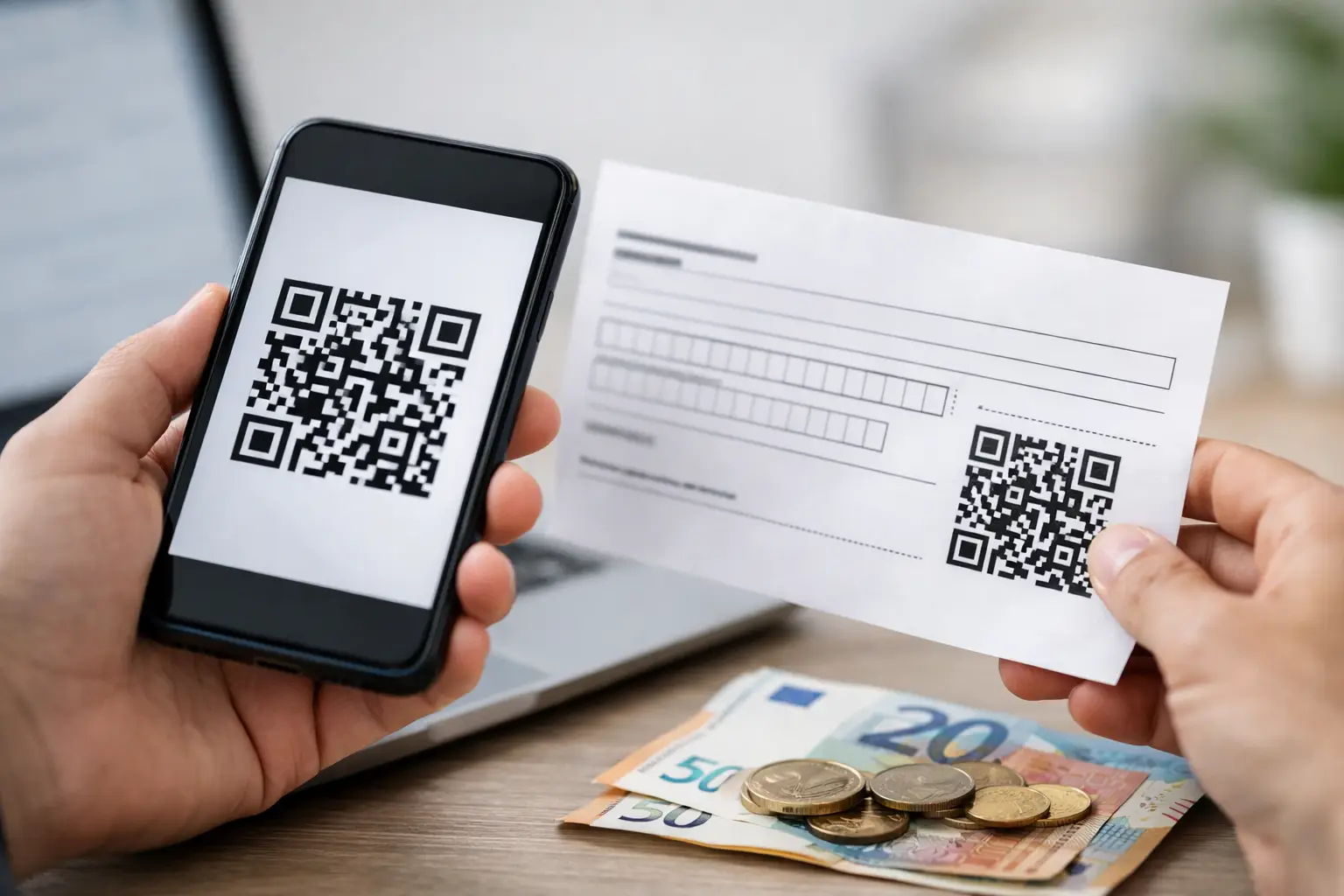
A parent received the payment invitation, but the transfer arrives without communication. A member pays the wrong amount. Another pays the membership fee for two children at once. For the treasurer, the QR SEPA membership fee payment is only really worthwhile if it reduces these searches, and not just if it provides an additional payment method.
For a club, a school, or a Belgian non-profit association (ASBL), the right goal is simple: send a clear request, allow the member to pay in a few steps, then link the payment to the correct membership fee without uncertain re-entry. The QR SEPA meets this need very well, provided it is integrated into a structured administrative follow-up.
How does QR SEPA membership fee payment work?
A QR SEPA is a code that the member can scan from their banking app. It prepares the transfer information: the beneficiary, the IBAN, the requested amount, and the communication. The payer verifies the data and then validates the operation themselves in their banking app.
For a membership fee, this mainly avoids typing errors. The member does not have to copy an account number or search for which reference to indicate. On an invoice, in an email, or in a reminder, the QR code transforms an often postponed action into a short and precise operation.
The term "SEPA" indicates that the payment is based on the European bank transfer. It is not a direct debit: the association does not debit the member's account. The member retains payment validation, which is often easier to accept for a first registration or an annual membership fee.
The data that makes the difference
A useful QR code contains correct information, but the quality of tracking depends mainly on the payment communication. Each membership fee request should ideally receive a unique reference. This allows knowing if the transfer concerns Léa, her brother Tom, a workshop, or a family membership.
The amount must also correspond to the member's actual situation. A dance school may apply a different rate depending on the chosen course, a discount for the second child, or a late registration. Sending the same QR to everyone is quick at first but creates exceptions that are difficult to handle later.
Reducing unpaid fees without multiplying reminders
An unpaid fee is not always a refusal to pay. It may be a forgotten email, a request sent to the wrong parent, an unclear amount, or a postponed transfer due to lack of time. The QR SEPA addresses these small obstacles, especially when the request arrives at the right time.
The request must specify what is being paid: "membership fee season 2026-2027," "registration for Tuesday's course," or "summer workshop." It also indicates a realistic deadline. For families, it is preferable that the summary mentions the children concerned and the total expected. This limits questions before payment and unanticipated partial payments.
A first reminder can be courteous and factual a few days before the deadline. After that, a second message benefits from reminding the remaining amount, the communication, and the QR code. This follow-up is much more effective when it targets only the concerned people. Sending a general reminder to all members, including those already up to date, gives a disorganized image and generates unnecessary responses.
The QR code therefore does not replace the reminder procedure. It makes each reminder actionable: the member opens the message, scans, verifies, and pays. For a volunteer team, this difference can represent several hours saved in each membership fee campaign.
From received transfer to "paid" status
The tricky part is not sending the QR, but the bank reconciliation. Seeing money in the account does not automatically indicate which membership fee is settled. Without a unique reference or a centralized view, the treasurer must compare the bank statement, spreadsheet, emails, and sometimes coaches' lists.
Reliable management follows a clear cycle: the membership fee is created for the right person or household, a request with QR SEPA is sent, the received payment is reconciled, then the status is updated. Authorized persons then have the same information. The secretariat knows a registration is finalized, the treasurer sees the expected amounts, and the course manager does not have to guess who is up to date.
This centralization avoids a common problem with Excel: multiple copies of the same file circulate, each with a different status. One indicates "paid," another "to remind." The risk is not only administrative. An error can lead to denying access to an activity to a member who has actually paid or to requesting an amount already paid.
With a management tool such as Organzia, memberships, households, communications, and payment tracking are gathered in the same register. The QR SEPA then becomes a component of a complete process, rather than an image added to a document.
Anticipate cases outside the standard framework
Even with a perfect request, some payments will not exactly match the expected amount. Good organization does not seek to eliminate all special cases: it plans how to handle them without losing track of the decision.
A parent can pay for several children, make a deposit, or use an old communication. A member can also request an installment plan, benefit from a social discount, or pay cash during an office hour. These situations must be recorded with the same level of precision as a QR transfer, otherwise the displayed balance no longer reflects reality.
The most useful rule is to distinguish the requested amount, the amount received, and the remaining balance. Thus, a partial payment is neither wrongly considered a total unpaid fee nor validated as a fully settled membership fee. For multiple payments, create explicit deadlines rather than a vague note in an email.
The choice of QR SEPA also depends on your audience. It is very suitable for parents and members who use a Belgian banking app. For some events, a credit card or online payment may be more appropriate, especially if registration must be confirmed immediately. Cash remains sometimes necessary, but it must be entered quickly with its receipt to avoid creating a gray area in accounting.
Implement a simple and controllable process
Before sending your first campaign, start by cleaning member data. Verify the payer contact's email address, the link between children and their household, the applicable rate, and any discounts. A flawless QR will not compensate for a request addressed to an incorrect family.
Then define coherent communication. It can include the year or activity, but it must above all be unique per request. Keep a logic that the team easily understands, without having to interpret complicated codes. The person who takes over follow-up in case of absence must be able to find the information in a few seconds.
Finally, clearly assign roles. The treasurer can validate payments and monitor balances, while the secretariat prepares requests and activity managers consult only the status necessary for organizing courses. This distribution protects data while avoiding everything relying on a single person.
A good membership fee payment is not measured by the number of QR codes sent. It is seen when a member knows what to pay, when the committee knows what has been received, and when no one has to dig through old messages to resolve a simple question.