
A treasurer should not have to compare a bank statement, a spreadsheet, and screenshots sent by parents every week. Yet, this is still the daily routine for many clubs and associations. Mobile payment is not only about offering a more modern way to pay: when well integrated into administration, it allows knowing who paid, for which registration, and when.
For a dance school, a sports club, or a non-profit organization (ASBL), the challenge is simple: make payment easier for families and members without losing control over the fees. The relevant solution is not necessarily the one that offers the most payment methods. It is the one that truly reduces manual tasks, omissions, and reminders.
Why Mobile Payment Changes Fee Tracking
Bank transfer payments remain common in associations. They are familiar, low-cost, and work well for certain annual fees. Their limitation appears when communications are incomplete, when several children from the same household are registered, or when payments are spread across multiple activities. Identifying the correct file can then take more time than expected.
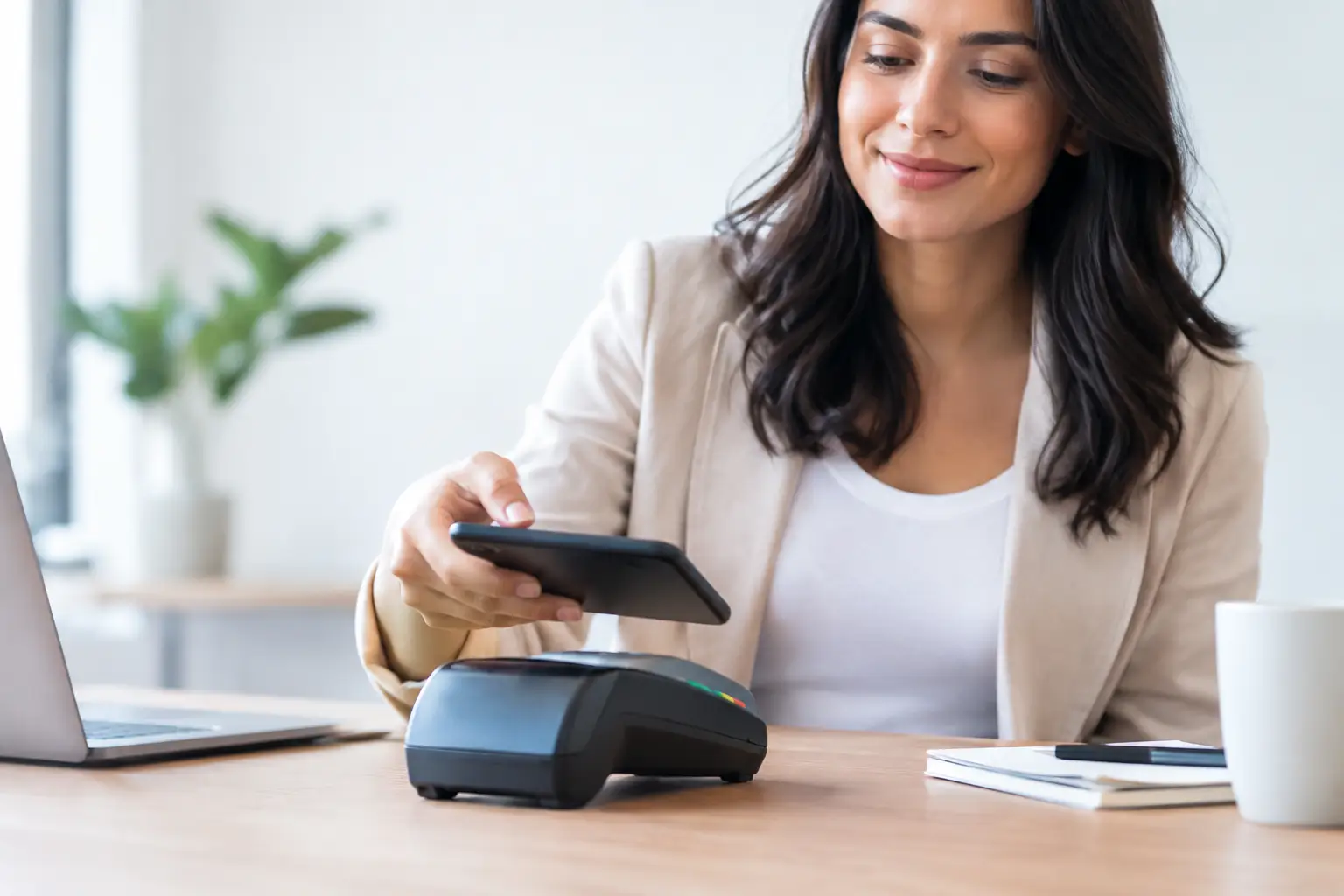
Mobile payment addresses this problem by linking the payment action directly to the request itself. A parent receives a clear invitation, opens the payment on their phone, chooses their banking app or card depending on the option offered, then pays the amount. The association receives actionable information rather than just a bank transaction to interpret.
This benefit is especially useful when registrations are concentrated over a few weeks. At the start of the season, a committee often has to manage new members, renewals, trials, group changes, and certificate requests simultaneously. Reducing manual payment checks frees up time for questions that truly require a human response.
A Simpler Process for Families
Parents do not all have the same habits. Some pay immediately from their banking app, others prefer to receive a structured request and pay later. Mobile payment is convenient because it adapts to when the person is available: after a class, during transport, or at home.
Simplicity does not mean eliminating all alternatives. A Belgian association sometimes welcomes members who pay by transfer, cash, or through a third party. A good process anticipates these cases without creating multiple separate records. Every payment must end up in the same place, with the same clear status.
Fewer Blind Reminders
A generic reminder sent to an entire list is rarely effective. It can even annoy those who paid the day before. If payment statuses are up to date, the association can remind only the cases truly pending, with the correct amount and due date.
It is also a matter of relationship with members. A precise and courteous reminder is more professional than an imprecise collective message. For volunteers, it also avoids having to respond individually to dozens of messages asking: "Did you receive my payment?"
Which Mobile Payment to Choose for an Association?
There is no single answer. The right choice depends on the type of activities, number of members, payment frequency, and audience habits. A fixed annual fee does not have the same needs as a school billing multiple courses, workshops, and shows throughout the year.
In Belgium, SEPA QR code payments are often appreciated for their directness: the member scans a code with their banking app, finds the payment details, and confirms. Card payments via providers such as Stripe or Mollie can also be useful when the organization wants to offer more flexibility, notably for online registration or ticketing.
The choice should remain proportional. Adding too many options can complicate tracking, multiply fees, or create unnecessary questions. The goal is not to turn an association into an e-commerce site. It is to enable each member to pay easily while maintaining clear administration.
The Criteria That Really Matter
Before activating a solution, it is useful to check four points: the link between payment and member file, visibility of status for managers, applied fees, and possibilities for automatic reconciliation.
Reconciliation is the decisive point. An isolated mobile payment, viewable only in a provider’s portal, solves only part of the problem. The information still needs to be reported in the fee list, the relevant registration verified, and communication made with the family. Conversely, when the payment is linked to a specific invoice, fee, or order, tracking becomes much more reliable.
Security also deserves concrete attention. Managers should not have to collect or store sensitive banking data. Payment providers handle the transaction, while the association keeps what it needs for administration: payer identity, amount, reference, and payment status.
Organizing Mobile Payment Without Losing Control
Mobile payment works well when it is part of a clear process. Start by defining what must be payable: annual fee, monthly subscription, workshop, uniform, event ticket, or occasional supplement. Each payment type must have an identifiable reference and tracking rule.
Then, associate amounts with the right people. In family organizations, the payer may be the parent, while the activity concerns one or more children. The file must therefore allow linking a payment to the household and each relevant registration. Without this structure, mobile payment speeds up collection but does not resolve administrative ambiguities.
Finally, define who can view and process payments. The treasurer needs a global view, but a course manager may only need to know if a member is up to date before a workshop starts. Appropriate access avoids sharing full files by email or giving too much information to too many people.
Keep Exceptions in the Same Register
Even with a well-thought-out digital solution, exceptions exist. A parent may pay in two installments after agreement. A member may hand over cash during training. A federation may cover part of the fees. These situations are not a process failure: they just need to be recorded in the same place as mobile payments.
This is where spreadsheets show their limits. One person edits a tab, another keeps a paper list, a third checks their bank account. Very quickly, no one knows which version is correct. A centralized register, on the other hand, preserves history, necessary comments, and the real status of each file.
Making Mobile Payment a Service Tool
The right payment message is short, precise, and useful. It indicates the purpose of the request, the amount, due date, and instructions. For an activity with limited places, it can also specify if registration is confirmed after payment receipt. This transparency reduces misunderstandings from the start.
It is better to announce the rules before having to send reminders. For example, a school can indicate at registration that the fee is payable by SEPA QR, transfer, or card, and that status will be updated in the member area. Families know what to expect and managers answer fewer repeated questions.
A platform like Organzia makes full sense when registrations, members, fees, and payments are gathered in the same environment. The committee no longer has to reconstruct information across multiple tools. It can track amounts due, payments received, and files to regularize from a shared view.
Mobile payment is not intended to replace human contact or all usual methods. It mainly aims to remove small frictions that accumulate: finding a reference, confirming receipt, updating a spreadsheet, sending a reminder, or answering a worried parent. Start with the flow that wastes you the most time, then set up a unique and clear tracking. This is often where administration becomes manageable again, even when registrations increase.